


Where Welders Actually Find Work These Days
From what I've seen knocking around the UK scene, welder jobs pop up in all sorts of spots. Construction sites need them for steel frames. Factories down in the Midlands keep hiring for production lines. And yeah the offshore rigs still pull in folks who don't mind the cold water and long shifts.
Thing is most people start by checking the usual spots online. Reed and Indeed throw up loads daily. But sometimes the good gigs come through word of mouth at the local welding supply shop.
Pay and Hours Without the Sugar Coating
Entry level stuff hovers around twenty two to twenty eight grand a year. Get a few years in with MIG or TIG under your belt and you can push forty k easy. Offshore pays better but the rota kills you sometimes. Two weeks on two off sounds nice until you're out there freezing.
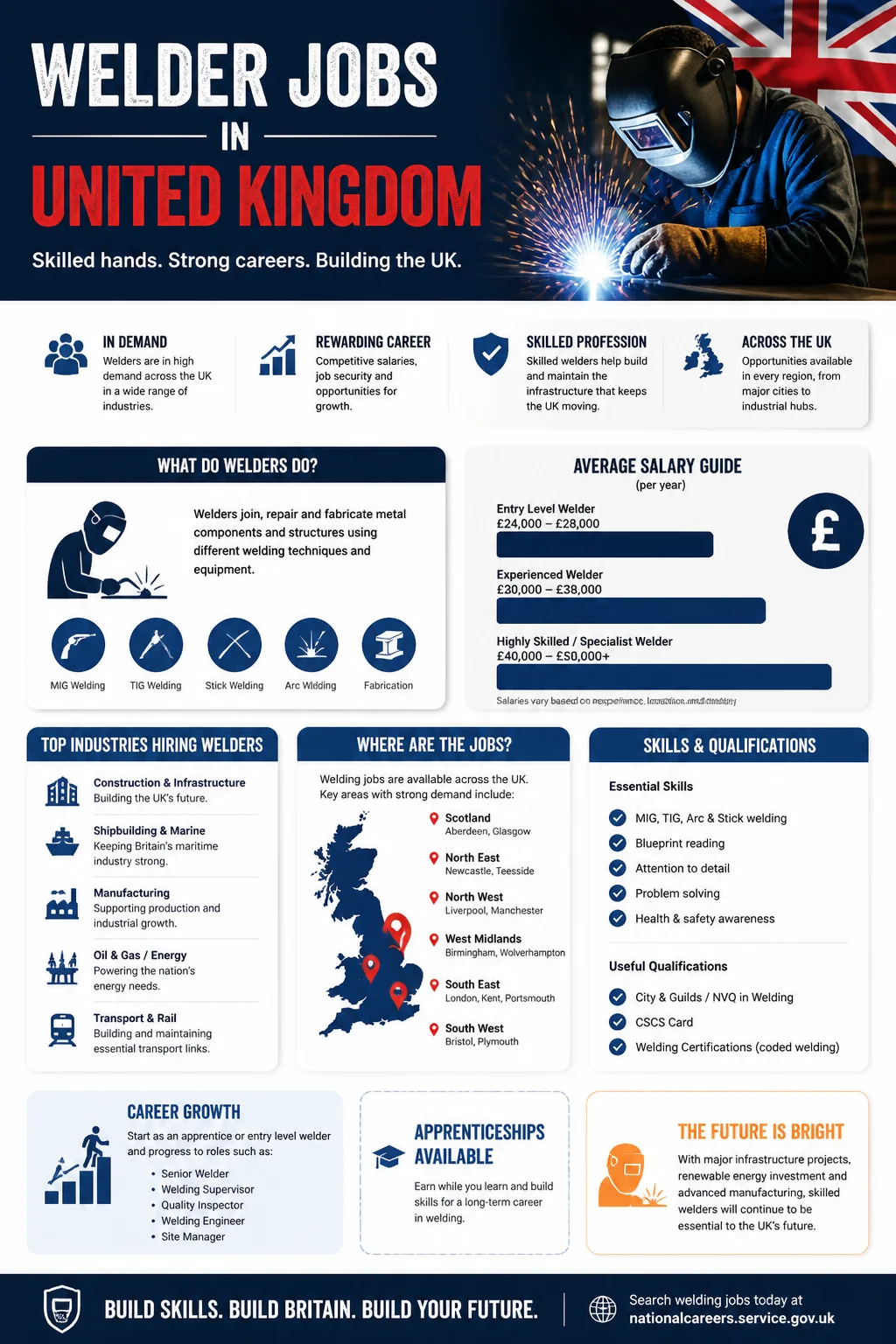
Honestly speaking the money jumps when you grab extra certs. CSWIP or PCN tickets open doors fast. Without them you're stuck on basic jobs.
Big difference.
What Employers Keep Asking For
Most ads want at least NVQ level two or three. Some places train you up if you've got basic experience already. They care about safety too. CSCS card is pretty much mandatory these days.
- Ability to read drawings
- Experience on stainless or aluminium helps a ton
- Own basic kit sometimes required
- Willing to travel to sites around the country
Not gonna lie the health side gets ignored a lot. Fumes build up over years so good ventilation matters more than most admit.
Offshore vs Land Based Gigs
Offshore welding jobs pay top rates but the lifestyle ain't for everyone. You fly out to platforms and live on the rig. Food's decent. Money's better. But missing family events adds up quick.
Land based work stays steadier. Shipyards in Scotland or car plants in the north keep steady demand. Construction swings with the economy though.
Exactly.
How to Break In If You're New
Start with a college course if you can. Six months to a year gets you the basics. Then find an apprenticeship. They still exist in manufacturing hubs.
Or jump straight into a helper role and learn on the job. Plenty of older welders still mentor if you show up keen.
Look for night classes around your area too. They fit around current work and build that portfolio fast.
Real Talk on the Daily Grind
Early starts every day. Heavy lifting. Standing for hours in awkward positions. Gloves wear out quick and your back will remind you why stretching matters.
But finishing a clean bead that holds pressure feels good. You see the result right there. No waiting around for approvals like in some office jobs.
In my experience the best crews treat it like a team. Bad ones leave you figuring stuff out alone.
Places That Keep Hiring
London and southeast need structural welders for big builds. North east has ship repair and energy work. Wales keeps factories going with steady production roles.
Check local unions too. They post openings members don't always see online. Sometimes the best leads come from old contacts at previous sites.
Don't sleep on smaller firms either. They pay less at first but teach more variety than big contractors.